
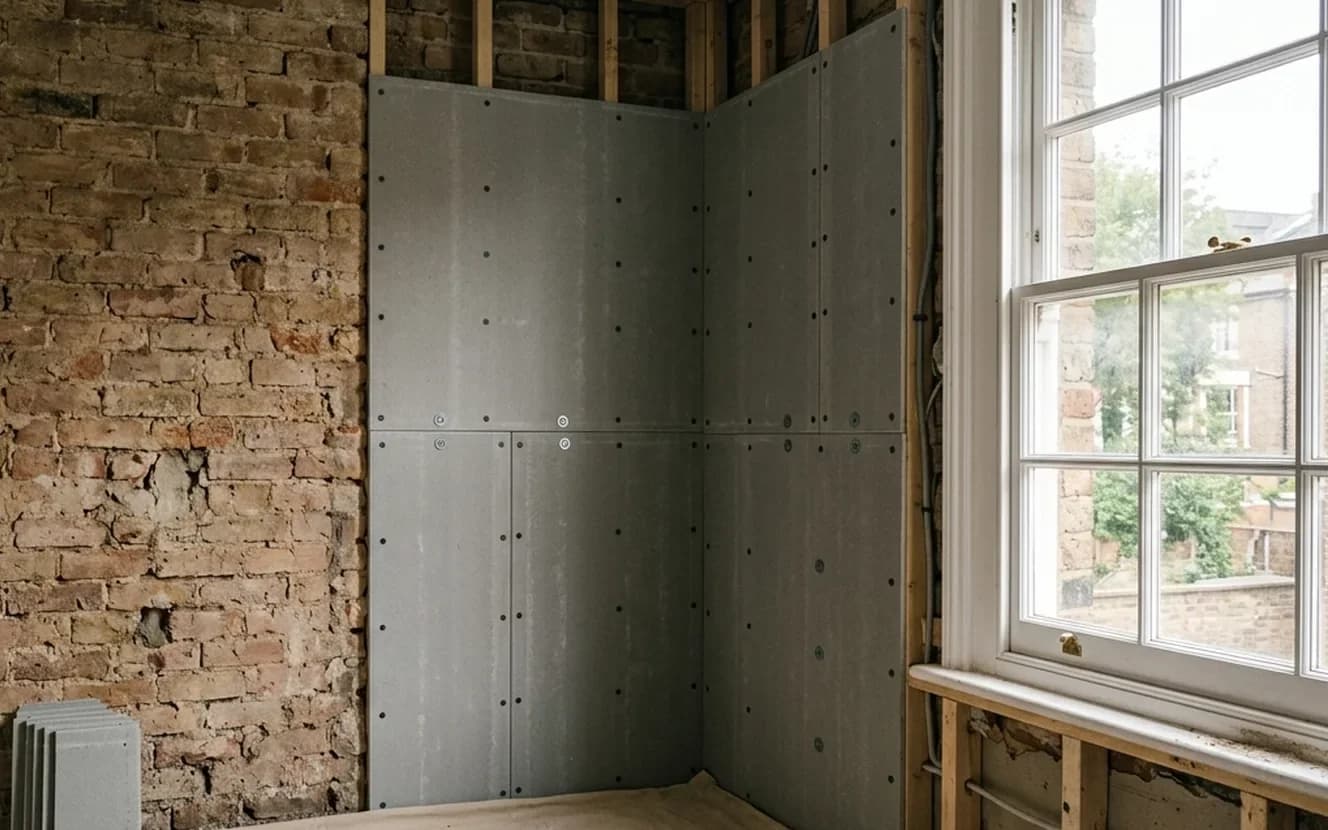
Every wall has a weight limit.
The limit covers everything stuck to the wall: the tiles, plus the adhesive and grout that hold them, per square metre. The British Standard for wall tiling (BS 5385) and the adhesive and board makers give these as the usual maximums:
| The wall | Most it should carry |
|---|---|
| Plaster, including a plaster skim over plasterboard | 20 kg/m² |
| Bare plasterboard (12.5 mm, not skimmed) | 32 kg/m² |
| Tile backer board | Set by the maker; commonly 40 kg/m² or more, fixed as they specify |
| Sand and cement render on brick or block | Much heavier tiles, if the render is sound |
Most bathroom walls in London homes are plastered, either brick or block with a coat of plaster, or plasterboard with a thin plaster skim. Either way, that usually means the lowest limit: 20 kg per square metre.
How heavy are your tiles?
Porcelain weighs about 2.3 to 2.4 kg per square metre for every millimetre of thickness. Add around 3 kg per square metre for the adhesive and grout, and more for large tiles, which need a thicker, fuller bed of adhesive.
| Tile | Weight once fixed | Can go on |
|---|---|---|
| Thin ceramic wall tile, up to about 8 mm | Up to about 20 kg/m² | Plaster or plasterboard |
| Porcelain, 10 mm | About 27 kg/m² | Bare plasterboard, backer board or render |
| Marble or stone, 10 mm | About 30 kg/m² | Bare plasterboard (just), backer board or render |
| Porcelain or stone, 20 mm | Around 50 kg/m² | Render, or a backer board rated for the weight |
So a standard 10 mm porcelain tile is already over the limit for a plastered wall, and thick porcelain or stone is over the limit for plasterboard too. The weight per square metre is usually on the box or the maker's spec sheet. If it isn't, ask the supplier.
What goes wrong.
Tiles over the limit rarely fall off straight away. More often the plaster behind them slowly lets go of the wall. Tiles start to sound hollow when tapped, grout lines crack, and in a shower, water gets in behind and does damage you can't see. It can take months or years to show, long after the job is finished.
Two related details matter too. Gypsum plaster has to be primed before a cement-based adhesive goes on, or the bond between them can fail. And in a shower, walls need a waterproof layer whatever they're made of: moisture-resistant plasterboard resists damp, but it isn't waterproof.
Doing it properly.
If the tiles you love are heavier than the wall can take, the wall is changed to suit them:
- On brick or block walls, the old plaster is usually stripped back to the masonry. The wall is then rendered, or lined with tile backer board fixed to the masonry.
- On stud walls, the plasterboard is replaced with tile backer board screwed to the studs.
- In the shower, the board joints are sealed and the area is waterproofed as the board maker specifies.
- Or, where changing the wall doesn't make sense, choose a lighter tile, such as a thinner porcelain.
Stripping and boarding adds labour, materials and drying time, so it shows up in the price. It's also the part of the job that keeps the tiles on the wall.
Why one quote can be cheaper than another.
Wall preparation disappears behind the tiles. Once the room is finished, a wall that was stripped and boarded looks exactly like one that was tiled straight over old plaster. That makes it the easiest thing to leave out of a quote, sometimes to win the job and sometimes simply because nobody checked what the wall was made of.
So when two quotes for the same tiles are far apart, it's worth finding out why. The lower one may be fine. Or it may be the same bathroom without the part that holds it up.
Questions to ask before you sign
- What will the tiles be fixed to: the existing plaster, bare plasterboard, backer board or render?
- What do the tiles I've chosen weigh per square metre once they're fixed, and is that within the limit for the wall?
- Is the old plaster or old tiling coming off? If not, why not?
- How will the shower area be waterproofed?
- Which adhesive and primer will you use?
- Is the wall preparation shown in the quote, or folded into "tiling"?
How we handle it.
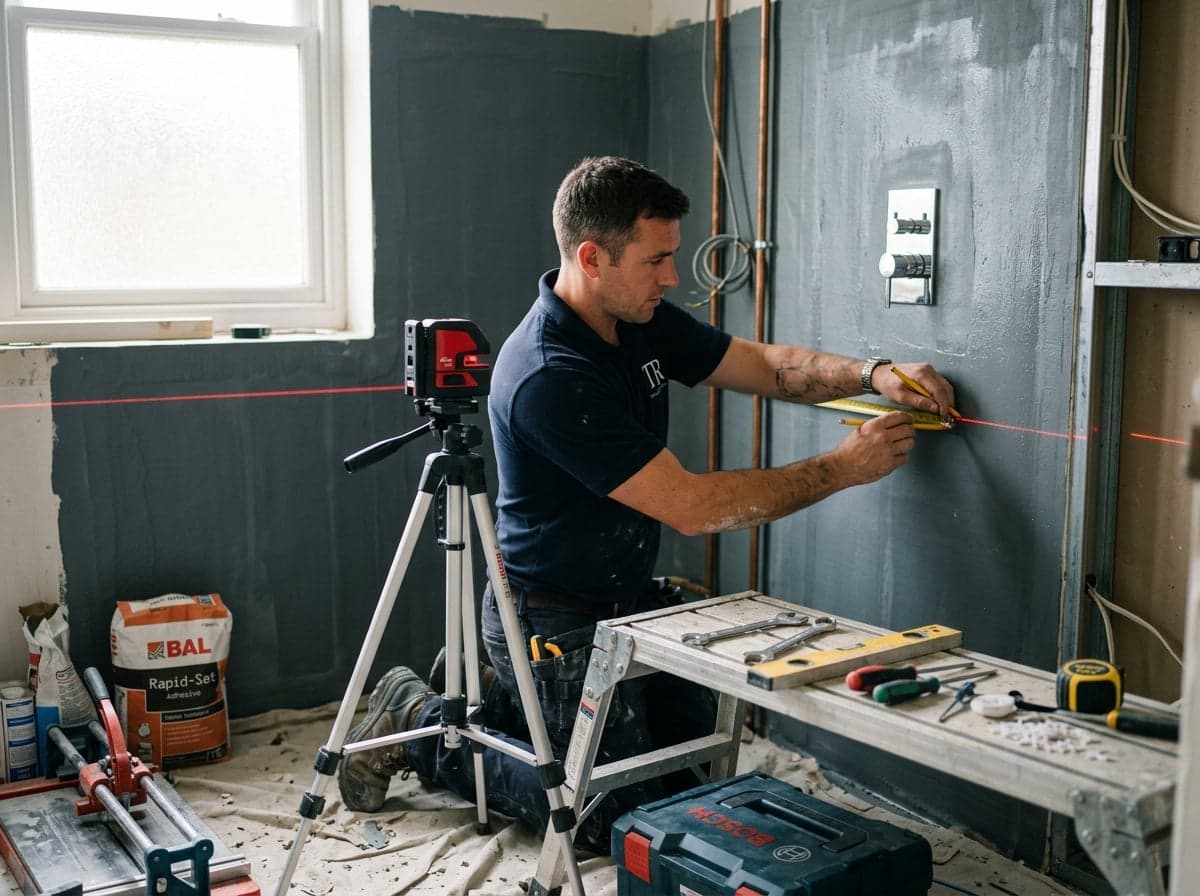
At the home visit we check what your walls are made of and talk through the tiles you like. Our quotes are itemised, so you can see the preparation your tiles need from the start, rather than finding out once the old tiles are off. If something hidden turns up, such as plaster that's already loose, we show you and agree it before doing any extra work.
Read more in the planning guide.
Get a quote that includes the walls.
Tell us about your bathroom and the tiles you're drawn to. We'll check the walls at the home visit and price the job to last.
Related: Start to finish — steps to building a dream bathroomCreate your project brief